Iowa, Nevada to Launch Caucus Voting by Phone for 2020

Democrats in the early presidential contest states of Iowa and Nevada will be able to cast their votes over the telephone instead of showing up at their states’ traditional neighborhood caucus meetings next February, according to plans unveiled by the state parties.

The tele-caucus systems, the result of a mandate from the Democratic National Committee, are aimed at opening the local-level political gatherings to more people, especially evening shift-workers and people with disabilities, whom critics of the caucuses have long said are blocked from the process.

The changes are expected to boost voter participation across the board, presenting a new opportunity for the Democratic Party’s 2020 candidates to drive up support in the crucial early voting states.

“This is a no-excuse option” for participation, said Shelby Wiltz, the Nevada Democrats’ caucus director.

Party officials don’t have an estimate of how many voters will take advantage of the call-in option. But in Iowa, some recent polls show as many as 20% of Democrats will participate virtually. In Nevada, most voters tend to cast ballots early during regular elections, and party officials expect many will take advantage of the early presidential vote.

FILE – A precinct captain argues his position during a Democratic caucus at the University of Nevada in Reno, Nevada, Feb. 20, 2016.

While rolling out a new voting system holds the promise of more voter participation, it also comes with potential risk for confusion or technical troubles. But the party is moving forward to try and address long-standing criticism that the caucuses are exclusionary and favor some candidates over others.

Increasing criticism

The Iowa caucuses, a series of party-run, local-level organizing meetings that adopted a presidential preference element more than 50 years ago, have come under increasing criticism in the past decade for their fixed evening time and place. Such rules effectively barred participation in the first-in-the-country nominating contest, for instance, for parents unable to find child care or older voters hesitant to venture out in the dead of winter.

Hillary Clinton and her supporters complained that Iowa’s process “disenfranchised” those unable to attend after she finished a disappointing third place in the 2008 caucuses.

In 2016, backers of Sen. Bernie Sanders cried foul over the Iowa results when Clinton won a razor-thin margin, 49.9% to 49.6%, despite some irregularities in reporting results. The dispute, replicated in part in Nevada, was a key factor in the push from groups on the left to overhaul the nominating process heading into 2020.

Nevada, the third state in the Democrats’ nominating contest sequence, has only been an early caucus state since 2008, and the process still remains relatively new to many residents.

Rural benefits

By opting for a dial-in program, the systems can reach people in Iowa’s and Nevada’s vast rural stretches where broadband internet coverage may be spotty. Iowa since 2014 has offered a smaller-scale tele-caucus, allowing out-of-state members of the military and Iowans living abroad to call in to live neighborhood caucus meetings and participate over the phone.

“One, we are a rural state. And let’s be honest, outside of Las Vegas and Reno, Nevada is a rural state. Everyone is connected by phone,” Iowa Democratic Party Chairman Troy Price said.

FILE – Precinct Chairwoman Judy Wittkop explains the rules during a caucus in Le Mars, Iowa, Jan. 3, 2008.

The DNC’s mandate has been a challenge for party operatives who sought to maintain security while also maintaining the spirit of the caucuses, which are chiefly local, party-building activities aimed at electing delegates to party conventions. Officials say by avoiding an internet-based program, they are reducing the risk of hacking, a key concern in an era of renewed concern about election tampering.

While Nevada Democrats said accessibility, not security, drove them to opt for a phone-in system, Iowa Democrats said they felt a lower-tech option was safer.

“With this system, it’s easier than making sure thousands of computers across the state are not filled with malware and not being hacked,” Price said.

Security concerns

Yet officials acknowledge that relying on phone systems does raise security concerns.

“Are they unhackable? Certainly not,” said Jeremy Epstein, a voting systems expert with ACM, the largest international association of computer science professionals. “None of these technologies are really bullet proof.”

The state parties presented their plans late last month to the DNC’s Rules and Bylaws Committee. Committee members applauded the work and gave conditional approval but asked for more information about the security and functionality of the systems.

“We are working with every state party that is integrating these tools so they can make their voting process secure and successful. We look forward to working with Democrats in these states to address the committee’s questions,” DNC spokesman David Bergstein said in a statement.

Both state parties plan to require Democratic voters to register online in advance of their virtual caucus, verifying their identity with a “multi-factor authentication.” Voters will receive a PIN that they’ll have to enter when they call in to participate.

Iowans who register on time will have six times to choose from to participate by phone, including the in-person caucus night, Feb. 3. Nevadans who register for the virtual caucus can participate on Feb. 16 or 17. Unlike Iowa, Nevada is also offering four days of in-person early caucusing to give people more options.

Wiltz said security experts with the DNC will be vetting the systems later this year to test for vulnerabilities to breaches or hacking.

“This isn’t something that we’re taking lightly. We understand our responsibility,” Wiltz said.

From: MeNeedIt

Melania Trump in West Virginia for Opioid Talk

First lady Melania Trump is visiting West Virginia to learn how a city at the center of the nation’s opioid epidemic is grappling with the crisis.

Trump on Monday participated in a roundtable discussion on opioids with federal, state and local officials in Huntington, West Virginia. Federal statistics show West Virginia has the highest opioid overdose rate in the U.S.

During the roughly hour-long meeting, Trump heard about how police, schools and health care centers in the area are fighting the opioid scourge. Huntington Mayor Steve Williams said it’s a grim task, and added that his city would still have to deal with the epidemic for at least the next 40 years even if all heroin sales were to abruptly stop.

From: MeNeedIt

Bible Shortage? Publishers Say Tariffs Could Cause It

Religious publishers say President Donald Trump’s most recent proposed tariffs on Chinese imports could result in a Bible shortage.

That’s because millions of Bibles are printed in China each year. Stan Jantz, president and CEO of the Evangelical Christian Publishers Association, says more than half of worldwide Bible production takes place in China. 
 
Critics of a proposed tariff say it would make the Bible more expensive for consumers. It would also hurt the efforts of Christian organizations that give away Bibles as part of their ministry.

The proposed 25% tariff would apply to all books, but critics say it would disproportionately affect Bibles and children’s books. Both tend to have specialized printing requirements that Chinese printers are set up to meet, while many domestic printers are not. 

From: MeNeedIt

Warren Raises $19.1M, Tops Sanders During Second Quarter

Elizabeth Warren raised $19.1 million in the second quarter, her campaign said Monday, cementing her status in the top tier of Democratic presidential contenders and a leading voice of the party’s liberal base.

The Massachusetts senator’s second-quarter contributions leave her behind only Pete Buttigieg, the South Bend, Ind., mayor who reported nearly $25 million in donations, and former Vice President Joe Biden, who tallied $21.5 million since his candidacy began in late April.

Perhaps most notably, Warren’s donations exceeded those reported by Vermont Sen. Bernie Sanders, her closest rival, who is also vying for liberal voters and is the only other candidate who has joined her in swearing off high-dollar fundraisers.

Warren’s success underscores the threat she poses to both Sanders and California Sen. Kamala Harris, whose $12 million second-quarter fundraising got a major boost in the final days of last month from her performance in the first Democratic debate. While Sanders appeals to progressives seeking an ambitious Democratic agenda, Warren has staked a claim to his base with her now-trademark policy plans. And as Harris seeks a foothold with black voters as the primary’s lone black female candidate, Warren is making headway of her own with black women.

“To sum it up: We raised more money than any other 100% grassroots-funded campaign,” said Roger Lau, Warren’s campaign manager. “That’s big.”

Warren more than tripled the $6 million she raised in the first three months of 2019 , when she silenced some skeptics of her long-term fundraising viability following her decision to rely on grassroots rather than high-dollar donations. The campaign’s $19.1 million came from more than 384,000 contributors giving more than 683,000 donations.

That’s less than the nearly 1 million individual donations Sanders’ campaign reported, but comparable with the 725,000 online donations that President Donald Trump’s reelection campaign reported during the second quarter.

Warren’s extensive organizing apparatus, particularly in early voting primary states, remains both a formidable asset — and a significant cost — as the campaign prepares to report $19.7 million in cash on hand. Her operation currently counts more than 300 paid staff members, 60% of whom are in the four early voting states of Iowa, New Hampshire, South Carolina and Nevada, according to the campaign.

While a staffing footprint of that size is likely to spark questions about Warren’s high spending rate among some of her presidential rivals, her team has already underlined its confidence that the campaign will have enough resources for the long term.

“Overall, the Warren operation has a six-figure number of people who own a piece of the campaign and an eight-figure amount of money to go execute the plan. So, game on,” Warren adviser Joe Rospars tweeted after her first-quarter fundraising tally emerged.

Warren has an energetic output of policy proposals on everything from education to climate change, a signature of her 2020 efforts that has helped her push past a rocky start in the primary. That fast pace isn’t likely to change as the Democratic campaign nears an expected winnowing from about two dozen candidates.

This week alone, Warren is scheduled to hold a town hall in Milwaukee after joining a half-dozen other Democratic presidential hopefuls at a gathering hosted by the League of United Latin American Citizens. She’ll then head to Philadelphia for Netroots Nation, an annual conference for progressive activists.

“In the weeks and months ahead, we’ll keep growing our movement across the country and Elizabeth will keep rolling out new plans to level the playing field for working people,” Lau wrote in an email to supporters.

Warren was already a guaranteed presence in this fall’s Democratic primary debates, which require at least 130,000 donors as well as minimum polling performance according to rules set by the Democratic National Committee. She’ll likely be joined on that stage in the fall by a rival whose showing she praised after last month’s first debate: former Housing Secretary Julian Castro, who reported on Monday that he had met the higher donor threshold needed to qualify.

From: MeNeedIt

In a First, Afghan Government on Board With Taliban Talks

A 50-member delegation of Afghan elites is in Qatar for peace talks with Taliban leaders, with the hopes of ending the 18-year-long conflict in Afghanistan.

The two-day summit, facilitated by Germany and Qatar, is an “historic opportunity for all of them to bridge trust deficit, which will help pave the way for direct peace negotiations between Afghan government and the Taliban,” said Asadullah Zaeri, a spokesman of the country’s High Peace Council.

The delegation includes politicians, top members of the council, representatives of women’s groups and senior journalists, he said.

Although both sides have emphasized that members of Afghan government are attending in their personal capacity, not representing Afghan President Ashraf Ghani’s government, their presence makes this conference different from the intra-Afghan conference in Moscow in April. At that gathering, the Taliban refused to sit at the table with anyone from the administration of President Ghani – an administration they insist is a “puppet” of the United States.

Ghani termed that conference a failure.

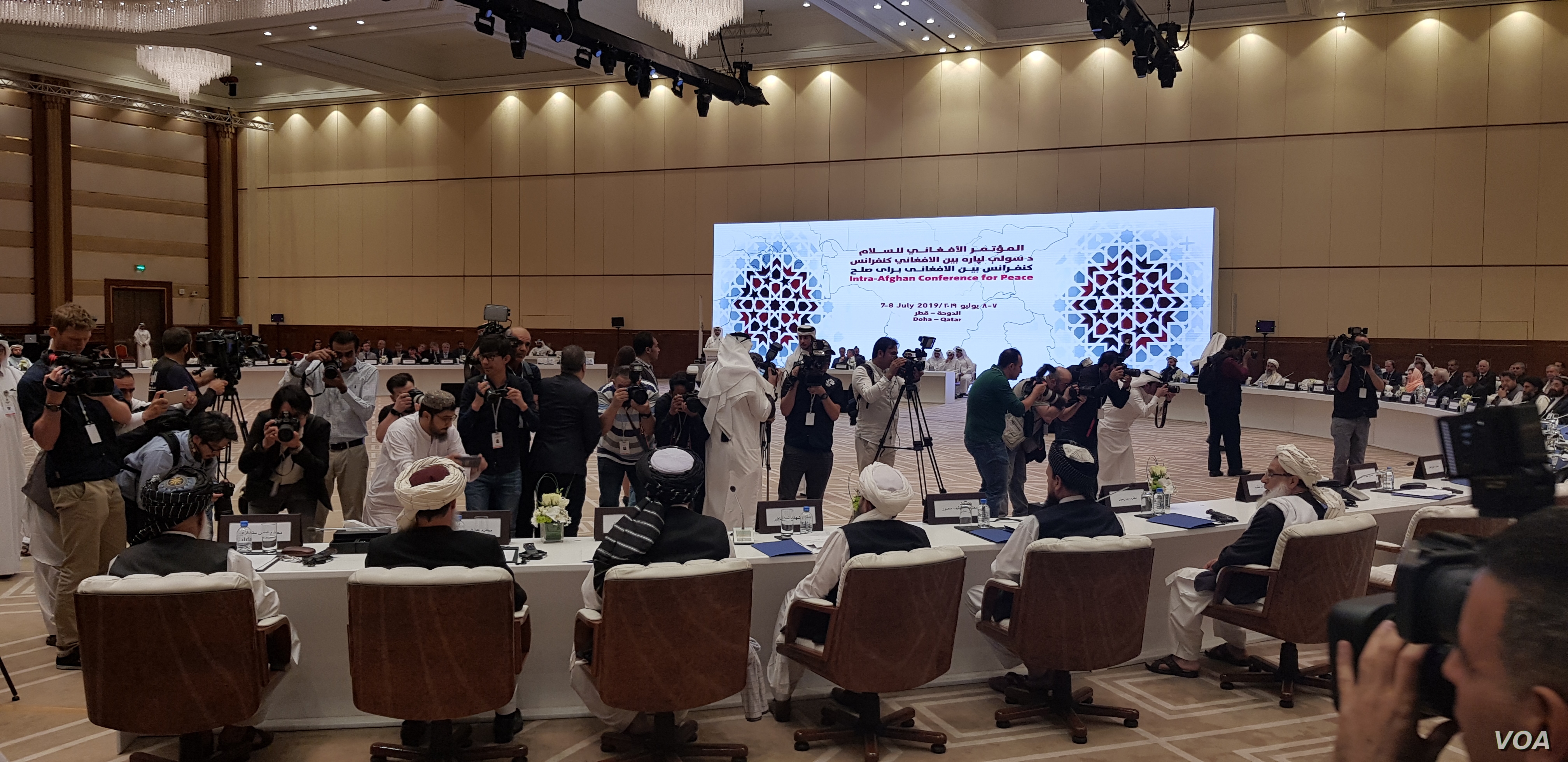
Members of the Taliban political office are seen inside the conference hall at the start of the intra-Afghan dialogue. Sitting far right is Sher Mohammad Abbas Stanekzai, head of the Taliban delegation, in Doha, Qatar, July 7, 2019. (A. Tanzeem/VOA)

However, the United States seems to have succeeded in its efforts to get the Taliban to show flexibility.

“The Intra-Afghan Conference for Peace in #Doha has been a long time coming. It’s great to see senior government, civil society, women, and Taliban representatives at one table together,” tweeted U.S. Secretary of State Mike Pompeo.

The conference organizers are hoping this first step would pave way for a bigger breakthrough in future.

“A partial success is for people to continue to talk. A great success would be for them to come up with a framework that could lead into direct negotiations, Afghan-Afghan, and hopefully catch up with the speed in which the talks between the Taliban and the United States are progressing,” said Sultan Barakat, the director of the Center for Conflict and Humanitarian Studies at Doha Institute, who has been closely involved in organizing the event.
 
The Afghan meeting comes as the U.S. special envoy Zalmay Khalilzad, who’s already holding talks with the Taliban, is nearing an agreement over a timeframe for the U.S. and NATO troop withdrawal from the country.

Afghan delegates inside the conference hall included Lotfullah Najafizada (2nd-R), the head of Afghan TV channel Tolo News, in Doha, Qatar, July 7, 2019. U.S special envoy Zalmay Khalilzad is seen center rear, with red tie. (A. Tanzeem/VOA)

 Both sides claim the talks are progressing well.

“The last 6 days of talks have been the most productive session to date,” tweeted Khalilzad on Saturday. The two sides will resume on the 9th after this intra-Afghan interaction which Khalilzad called “a critical milestone.”

A Taliban spokesman said in a future conference, the insurgent group may be willing to talk to top level Ghani administration officials.

“If someone is coming in his or her personal capacity and expressing his or her views on how to bring about peace in Afghanistan, we have not put any restriction on that,” said Suhail Shaheen when asked whether the Taliban could sit with government ministers or top-level officials.  

Afghan High Peace Council member Jamaluddin Badar said government representatives may be in Doha in their personal capacity but they “seemed to be giving the government’s point of view.”

Media representatives were only allowed to briefly take pictures at the start of the intra-Afghan dialogue and was asked to leave before the opening statements, in Doha, Qatar, July 7, 2019. (A. Tanzeem/VOA)

He felt positive about the discussions held till late Sunday afternoon. The Taliban, he said, seemed to be willing to address some critical concerns of most Afghans, such as how to protect the gains made since the ouster of the insurgent group in 2001, particularly in terms of institution building and human rights.

“We might have disagreements with the Taliban on how to interpret those rights, but I don’t think they will be strong enough to lead to fighting,” he said. The Taliban, he added, have even been talking about the need to reduce violence against women.

He was not the only one who expressed optimism about the discussions with the Taliban.

“I think their attitude has changed tremendously. Last night they sat with women and we chatted. They tried to show that they are willing to talk to women,” said Asila Wardak, a women’s rights activist attending the conference.

Members of the Taliban delegation are seen at the Sheraton Doha, before the start of the intra-Afghan dialogue, in Doha, Qatar, July 7, 2019. (A. Tanzeem/VOA)


From: MeNeedIt

Migrants, Stuck in Libya, Demand Evacuation as Conflict Escalates

“We don’t need to eat,” said a young man held in a Libyan detention center five days after the compound was bombed killing more than 50 people and injuring at least 130.  “We didn’t touch the food. We need to be out of Libya.”  
 
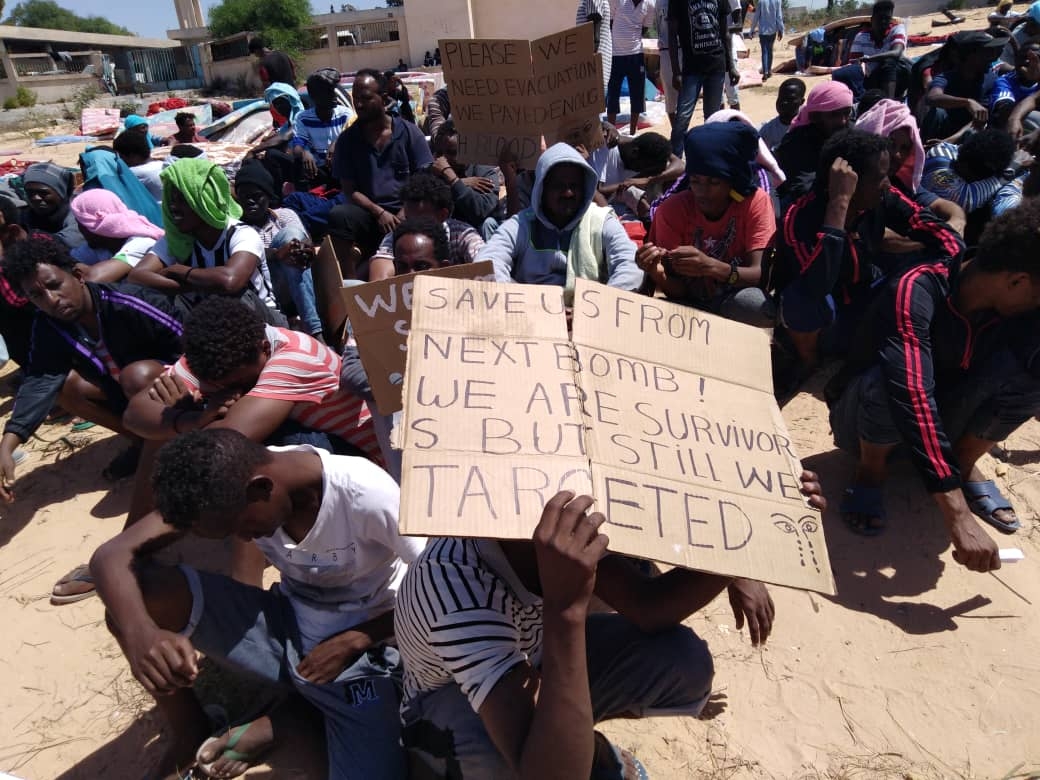
The hunger strike in the detention center was on its third day Sunday, according to the protester communicating with VOA via phone and social media. He sent pictures of detainees holding signs like “We are in the grave” and “Save us from the next bomb. We are survivors, but still we are targeted.”

News and additional photographs of the protest came from other detainees communicating with hidden mobile phones.
 
The airstrikes hit the detention center late Tuesday, after international organizations warned both sides of Libya’s ongoing war that civilians were held at that location, which has been targeted before. Amnesty International says there is evidence the detention center is located near weapons’ storage, but Tripoli authorities say there is no legitimate military target in the area.

The morning after airstrikes hit a detention center holding migrants killed more than 50 people and injured at least 130, blood still stains the rubble as officials search for human remains, in Tripoli, Libya, July 3, 2019. (H. Murdock/VOA)

Officials say about 600 people were inside the detention center when the airstrikes hit a nearby garage, and then the center itself. Some survivors reported breaking open the doors of the detention center to escape, others escaped the bombing after guards let them out. Still others reported shots fired in the chaos.  
 
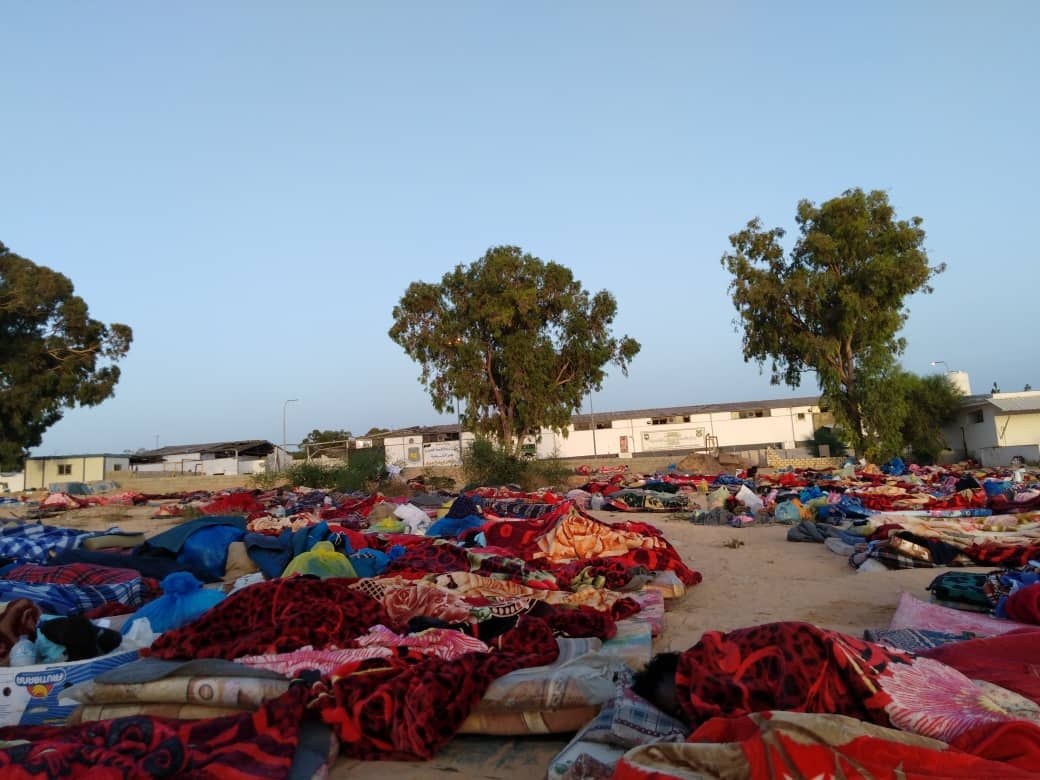
Five days later, migrants were still sleeping outside in the yard on Sunday, according to detainees, with part of the center destroyed and other parts appearing to be about to collapse.

The United Nations announced it would start evacuations over the weekend, but some protesters said moving to another detention center would only prolong the danger.

“If they are taking us to another detention center, we won’t go,” the protester told VOA on the phone. “We want to get out of this country or stay here.”

The migrants say they fled war, violence and abject poverty and risked their lives for the chance at a better life in Europe, before being captured and held in Tripoli. Photographed and transmitted to VOA July 7, 2019, in Tripoli, Libya.

Escalating war
 
To wind up in a Libyan detention center, migrants travel from across sub-Saharan Africa, the Middle East and Asia in hopes of crossing the Mediterranean Sea to Europe.  
 
Many people die on the trip to Libya alone and nearly 700 people have drowned in the Mediterranean Sea in 2019 trying to cross to Europe, according to the International Organization for Migration.
 
Thousands of survivors remain detained in Libya, hoping to try to cross to Europe and unwilling to return to the wars, violence and dire poverty they fled.  But as the war for Tripoli intensifies, some say Libya is as dangerous as the countries they fled.
 
“Sudan, Libya… they are the same,” said one woman outside the detention center only hours after last week’s bombing.  She had fled war and genocide in Sudan, only to find herself detained, impoverished and terrified in Libya, she said.

After the detention center was bombed, remaining structures appeared unstable and five days later, migrants were still sleeping outdoors. Pictured and transmitted to VOA July 7, 2019, in Tripoli, Libya.

Libyan forces have been battling for the capital since early April, when Khalifa Haftar, the de-facto leader of eastern Libya declared he would reunite the divided country by force and marched on Tripoli in the west. Forces loyal to the Government of National Accord, which runs western Libya, have been defending the city since. Neither side appears to be backing down.
 
Nearly 1,000 people have been killed and 5,000 wounded, according to the World Health Organization, and more than 100,000 have fled their homes.
 
Protesters outside the detention center on Sunday secretly sent out pictures and videos, calling on the international community to rescue them and allow them to apply for asylum in safer countries.
 
“Doctors Without Borders came with medicine, but we don’t want medicine,” said the protester communicating with VOA via phone and social media. “The UNHCR evacuated some people but we don’t want to evacuate to another detention center.  
 
“We want to go to a safe country, or we will stay here.”

An airstrike hits a Tripoli suburb July 7, 2019, as forces loyal to the Government of National Accord in the west battled forces loyal to Khalifa Haftar, the eastern de-facto leader who has vowed to take the Libyan capital by force. (H. Murdock/VOA)


From: MeNeedIt

Aftershocks in California Continue After 2 Major Earthquakes

Two remote California desert communities assessed damage after two major earthquakes hit the area at the end of last week, followed by thousands of smaller aftershocks.

Ridgecrest and neighboring Trona were hit hard by the magnitude 7.1 quake that rocked the Mojave Desert towns Friday. A day earlier, a magnitude 6.4 temblor hit the same patch of the desert.

The area, about 240 kilometers northeast of Los Angeles, is in recovery mode after the quakes crumbled buildings, ignited fires and cut power to thousands of homes and businesses.

The U.S. Geological Survey said Sunday there was just a 1% chance of another magnitude 7 or higher earthquake in the next week, and a rising possibility of no magnitude 6 quakes.

California Governor Gavin Newsom has declared a state of emergency for the area and warned local governments to strengthen alert systems and building codes. “It is a wake-up call for the rest of the state and other parts of the nation,” Newsom told reporters.

The damage wasn’t worse largely because of how remote the area is, but Newsom cautioned after touring Ridgecrest that “it’s deceiving, earthquake damage. You don’t notice it at first.”
 
The Democratic governor estimated the damage at more than $100 million and said U.S. President Donald Trump called him to offer federal support for rebuilding.


From: MeNeedIt

Rebuilding Syria’s Raqqa, One Park at a Time

Concerted efforts continue to rebuild the Syrian city of Raqqa, nearly two years after it was recaptured from the Islamic State (IS) terror group. And while these efforts mostly focus on essential services in the city, several activist groups are trying to take on something different by restoring parks, playgrounds and public squares.
 
U.S.-backed Syrian Democratic Forces liberated Raqqa from IS in October 2017.
 
During the 3-month-long battle, however, the city’s infrastructure was mostly destroyed, including dozens of public squares and parks that once were used by the terror group for the public execution of dissidents.
 
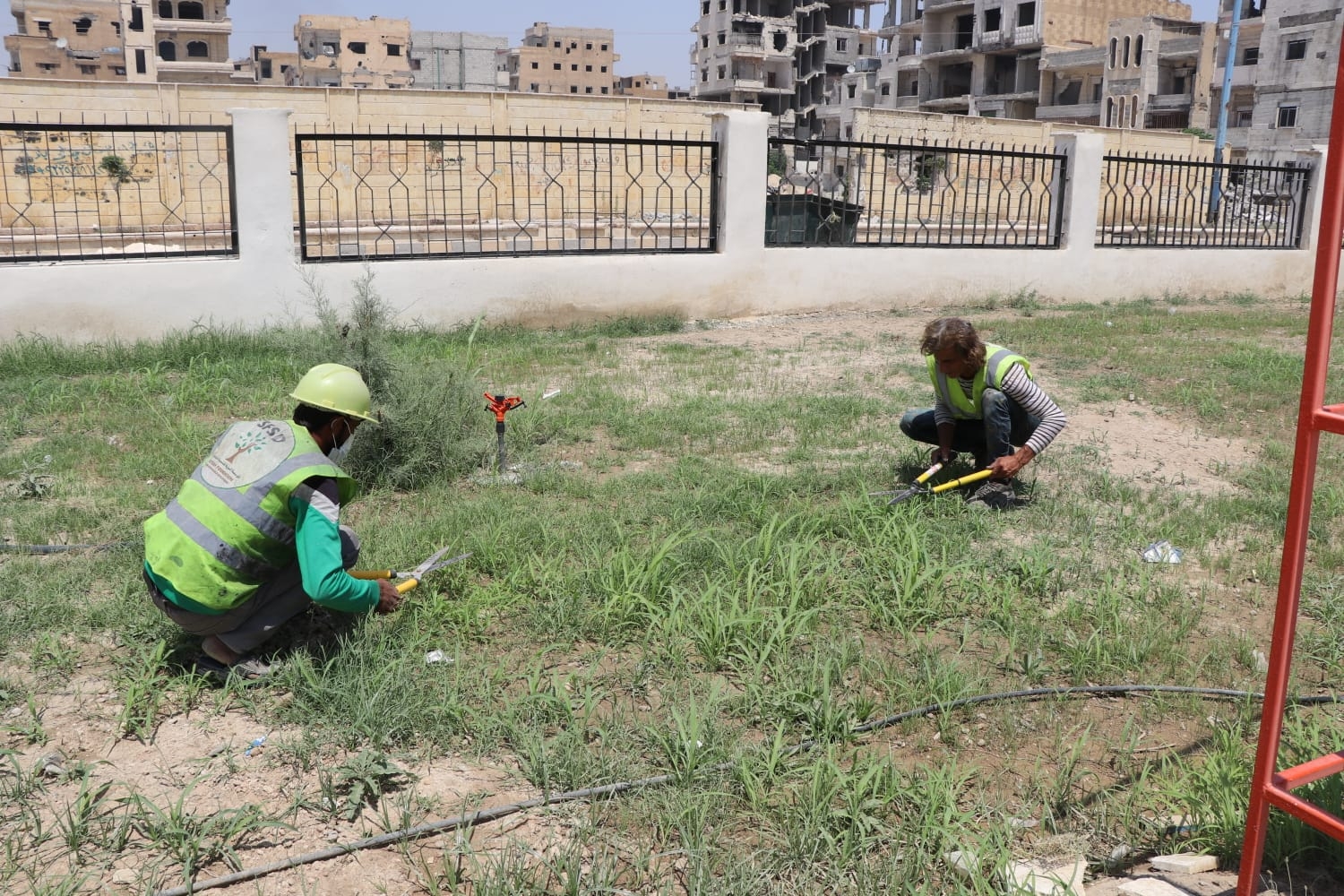
Activists who have taken on the mission to reconstruct these facilities say they are particularly focused on projects that could change the face of the city after years of horror under IS rule.

Ahed al-Hendi, head of the Syrian Foundation for Sustainable Development, a local organization that has been involved in several reconstruction projects in Raqqa, says that the idea behind supporting these efforts is to turn the former de facto capital of IS’ self-styled caliphate into a bright and colorful city.  
 
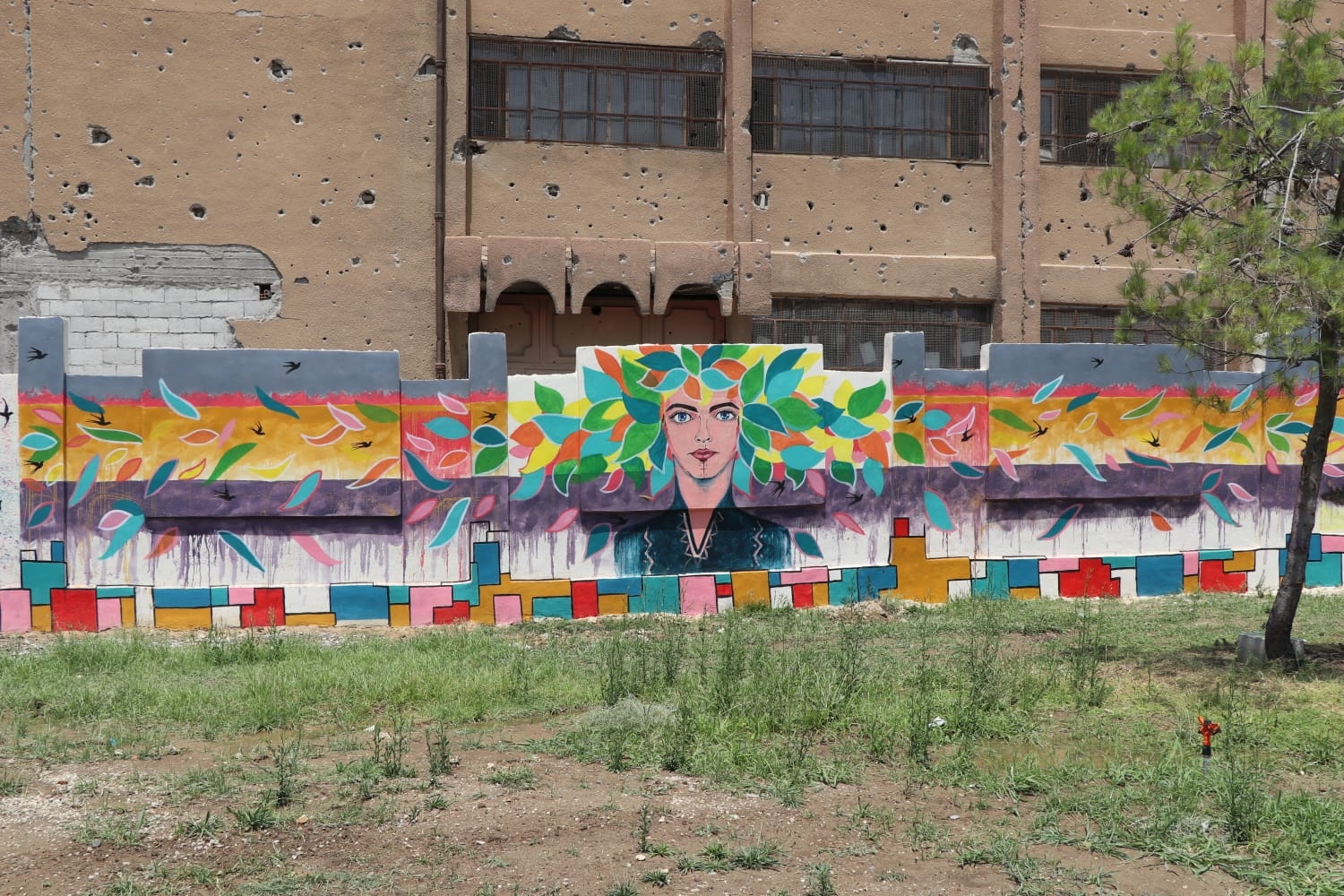
“Under IS rule, only one color was prevalent and allowed and that was black,” he told VOA. “The colors we use now while repairing these parks represent diversity and tolerance.”

A mural said to be representing diversity and tolerance is seen on wall at a park in Raqqa, Syria, June 25, 2019. (Courtesy photo)

 
Celebrating life after IS
 
During its reign, IS imposed strict social codes on the local population in Raqqa and elsewhere in Syria and Iraq.
 
Women in particular were required to wear black dresses covering their entire bodies and faces. Those who disobeyed such rules were given harsh punishments, including imprisonment and flogging.  
 
IS turned also the once bustling al-Naeem Square in downtown Raqqa into a major spot to carry out public executions that terrorized communities who lived under the group’s brutal rule in Syria and Iraq.
 
“What we are trying to do is to turn all these zones that once symbolized death into places that celebrate life to the fullest,” al-Hendi said.
 
Aslan Mamo, the lead artist who undertook the revamping of Raqqa parks, says that such projects bring hope and joy for the local population in Raqqa.

Children are seen playing at a newly-restored playground in Raqqa, Syria, June 25, 2019. (Courtesy photo)

“We can’t just rebuild for the sake of rebuilding. We have to put an aesthetic touch on everything we build from now on, because IS destroyed people from inside and tried to kill their taste for beauty,” he said.
 
He told VOA that they have also done similar works at sport fields, elementary schools and other facilities in the city.
 
While many displaced people have already returned to their homes in Raqqa after its liberation from IS, experts charge that rebuilding modern facilities would entice more people to consider coming back into the city in the future.
 
“Restoring public services such as parks and recreational centers is a key factor of stabilizing the city,” said Khaled al-‘Abo, a local civil engineer who has been helping rebuild several parks in Raqqa.
 
He said in a phone interview with VOA that his team’s objective is to rebuild every park in the city that has been destroyed or used by IS for “evil purposes.”

Workers are seen cutting grass and weeds at a park in Raqqa, Syria, June 13, 2019. (Courtesy photo)

 US contribution
 
According to activists, the initiative has been entirely funded the U.S. Agency for International Development (USAID), a U.S federal government entity that is responsible for providing assistance to communities in need around the world.
 
The United States has been a major contributor to the reconstruction of Raqqa and other cities devastated by the war against IS.
 
In March of this year, the U.S. announced more than $397 million in additional assistance for Syria, including areas recently liberated from IS.
 
With this amount, the U.S. humanitarian assistance, in response to the Syrian crisis, reached more than $9.5 billion since the beginning of the country’s civil war in 2011.
 
In Raqqa, residents hope that such initiatives would encourage other international donors to invest more in rebuilding their city.
 
“With no prospects of self-funding at the moment, only international assistance can help bring back some sense of normalcy to this city,” said Hamoud al-Salih, a 39-year-old resident of Raqqa.


From: MeNeedIt

Iran Raises Uranium Enrichment Past Nuclear Deal Limits

Iran announced Sunday it will raise its enrichment of uranium, breaking another limit of its unraveling 2015 nuclear deal with world powers and further heightening tensions between Tehran and the U.S.

Government spokesman Ali Rabiei told a news conference that Iran will go beyond the limit of 3.67% enrichment Sunday and that the new percentage “will be based on our needs,” without specifying.

Iran made the decision a year after President Donald Trump unilaterally withdrew from the deal. Iran has repeatedly warned Europe in recent weeks that it would begin walking away from an accord neutered by a maximalist American campaign of sanctions that blocked Tehran’s oil sales abroad and targeted its top officials.

Sunday’s decision came less than a week after Iran acknowledged breaking the deal’s 300-kilogram (661-pound) limit on its low-enriched uranium stockpile. Experts warn higher enrichment and a growing stockpile narrow the one-year window Iran would need to have enough material for an atomic bomb, something Iran denies it wants but the deal prevented.

In a last-minute diplomatic bid, French President Emmanuel Macron spoke to his Iranian counterpart, Hassan Rouhani, by phone Saturday, saying he is trying to find a way by July 15 to resume dialogue between Iran and Western partners. 

Hopes for saving the faltering deal appear increasingly dim, as the Europeans have been unable to offer Iran any effective way around U.S. sanctions. While the steps are concerning to nuclear non-proliferation experts, they could be easily reversible if Europeans offer Iran the sanctions relief it seeks. 

Tensions began rising in May when the U.S. rushed thousands of additional troops, an aircraft carrier, nuclear-capable B-52 bombers and advanced fighter jets to the Mideast. Mysterious oil tanker blasts near the Strait of Hormuz, attacks by Iranian-backed rebels in Yemen on Saudi Arabia and Iran shooting down a U.S. military drone have raised fears of a wider conflict engulfing a region crucial to global energy supplies.

From: MeNeedIt

Prodigy and Ukrainian Immigrant Creates Unique DNA Robot

Sofia Lysenko’s parents moved to the United States from the Ukraine when she was 3 years old. Today, at 17, some of the biggest American pharmaceutical companies want to team up with this teenage science prodigy because she has created an artificial macromolecule robot that can deliver drugs directly to the brain cells of patients with Alzheimer’s and Parkinson’s. Iryna Matviichuk met with Sofia to learn more. Anna Rice narrates her report.

From: MeNeedIt

California Assesses Damage After Second Major Earthquake

Emergency workers in Ridgecrest, Calif., are assessing the damage after a second major earthquake struck the desert community northeast of Los Angeles on Friday night. No deaths or major injuries have been reported from either the Thursday or Friday quake, but as Mike O’Sullivan reports, Friday’s magnitude-7.1 temblor caused additional damage and left residents shaken.

From: MeNeedIt